धृतराष्ट्र उवाच
धर्मक्षेत्रे कुरुक्षेत्रे समवेता युयुत्सव: |
मामकाः पाण्डवाश्चैव किमकुर्वत सञ्जय || 1 ||
Transliteration:
Dhritarashtra uvācha:
Dharmakṣetre kurukṣetre samavetā yuyutsavaḥ
māmakāḥ pāṇḍavāścaiva kimakurvata sañjaya
Word-by-Word Meaning:
– धृतराष्ट्र उवाच (Dhritarashtra uvācha): Dhritarashtra said
– धर्मक्षेत्रे (Dharmakṣetre): in the land of Dharma (righteousness)
– कुरुक्षेत्रे (Kurukṣetre): in the land of Kurus (Kurukshetra)
– समवेताः (Samavetāḥ): assembled
– युयुत्सवः (Yuyutsavaḥ): desirous to fight
– मामकाः (Māmakāḥ): my people (sons)
– पाण्डवाः च (Pāṇḍavāḥ ca): and the Pandavas
– एव (eva): indeed
– किम् (kim): what
– अकुर्वत (akurvata): did they do
– सञ्जय (Sañjaya): O Sanjaya
Explanation:
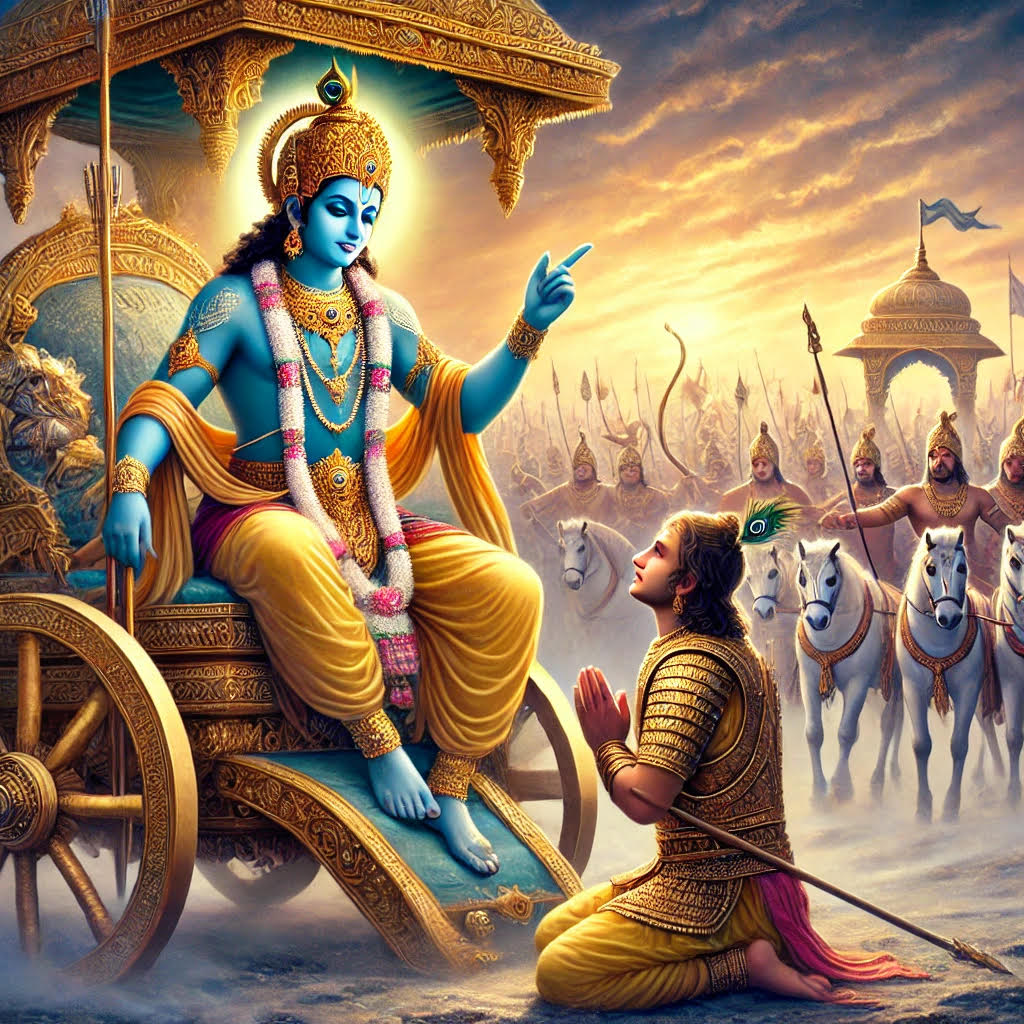
This verse marks the beginning of the Bhagavad Gita, set in the context of the Mahabharata. King Dhritarashtra, who is blind, inquires from his charioteer Sanjaya about the events on the battlefield of Kurukshetra. Dhritarashtra’s blindness is symbolic, representing not just his physical state but also his moral and emotional blindness regarding his sons’ actions.
1. Dhritarashtra’s Anxiety and Bias:
– Dhritarashtra uvācha: The verse opens with Dhritarashtra, the blind king of the Kuru dynasty, speaking. His inquiry reveals his deep concern and bias, as he refers to the Pandavas as separate from his own sons.
2. The Battlefield Context:
– Dharmakṣetre Kurukṣetre: Kurukshetra is described as a ‘Dharmakṣetra’ or a field of righteousness, indicating that the battle is not just a physical conflict but a moral and ethical one.
3. Desire for Battle:
– Samavetā yuyutsavaḥ: The warriors, assembled with a desire to fight, indicates the impending great battle between the Kauravas (Dhritarashtra’s sons) and the Pandavas (the sons of Pandu).
4. Dhritarashtra’s Concern:
– Māmakāḥ Pāṇḍavāścaiva: By mentioning “my sons” and “the sons of Pandu” separately, Dhritarashtra’s attachment and partiality towards his own sons are evident. His question reflects his anxiety about the outcome of the battle.
5. The Inquiry:
– Kimakurvata Sañjaya: Dhritarashtra asks Sanjaya what his sons and the Pandavas did after assembling on the battlefield. This question sets the stage for the narrative of the Bhagavad Gita, where Sanjaya, endowed with divine vision, describes the events.
Detailed Explanation:
Dhritarashtra’s inquiry is not just about the physical actions of the warriors but also reflects his deeper fears and hopes. He is anxious about the outcome of the battle and the fate of his sons. The use of the term “Dharmakṣetra” highlights the significance of the battle being fought on ethical and moral grounds. This first shloka serves as an introduction to the profound philosophical dialogue that follows, where Lord Krishna imparts wisdom to Arjuna, addressing the dilemmas and duties of life.
Discover more from BharatKiBaat
Subscribe to get the latest posts sent to your email.