सदः कृतान्तमेषां हृदयान्यस्तिमर्त्यः।
कृतमिच्छन्ति हि चाद्य च तच्चेदस्मात् गृहीतते॥
Sadaḥ kṛtānta-meṣāṁ hṛdayāny asti martyāḥ
Kṛtam icchanti hi cādya ca tacca ed asmāt gṛhītate
– Sadaḥ: always
– kṛtānta: those who are destined to die
– meṣāṁ: of the sheep (referring metaphorically to those without understanding)
– hṛdayāni: hearts
– asti: there are
– martyāḥ: mortal beings
– Kṛtam: what has been done
– icchanti: desire
– hi: indeed
– cādya: even now
– ca: and
– tacca: that
– ed: which
– asmāt: from this
– gṛhītate: is taken
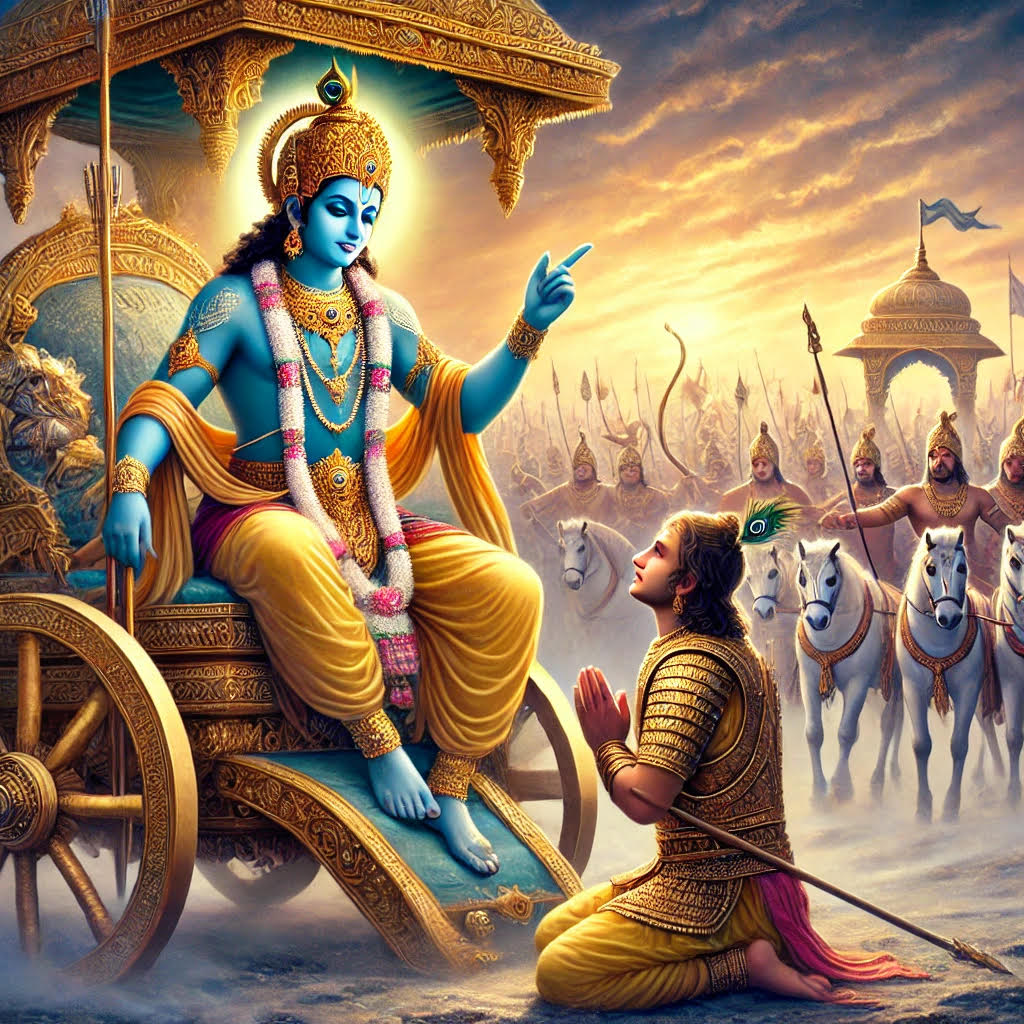
In this verse, Arjuna articulates his concern about the emotional turmoil caused by the impending battle against his own family. This reflects his internal conflict and highlights the moral dilemmas that arise in the face of duty and personal relationships.
1. Understanding the Context:
Arjuna stands on the battlefield of Kurukshetra, surrounded by relatives, friends, and teachers. The stakes of the war are not just political or territorial; they are deeply personal. His recognition of “kṛtānta“—those destined to die—emphasises the reality of mortality. This awareness heightens his apprehension about the conflict, which is not merely a battle for victory but a confrontation with his own ethical values.
2. Metaphor of Sheep:
The term “meṣāṁ” (sheep) metaphorically refers to individuals who follow without understanding, highlighting the masses who might blindly follow leaders into battle. This implies a deeper philosophical inquiry about consciousness and the ability to discern right from wrong. Arjuna’s choice to be reflective rather than reactive sets him apart from the crowd, indicating a higher level of awareness.
3. Emotional Weight:
The phrase “hṛdayāni asti martyāḥ” points to the emotional burden carried in the hearts of mortals. Arjuna is aware that each soldier on the battlefield is not just a warrior but a person with relationships, dreams, and fears. This human element makes the act of killing profoundly painful and morally complex.
4. Desire for Understanding:
Arjuna’s expression of desire to know what has been done—”Kṛtam icchanti“—reflects a universal longing for clarity and righteousness. This search for understanding is vital for anyone facing difficult choices. It illustrates the importance of introspection and the quest for moral integrity in the face of challenging circumstances.
5. The Struggle with Action:
The phrase “ca tacca ed asmāt gṛhītate” suggests that even now, in the midst of the battle preparations, the actions taken are not just physical but laden with emotional and spiritual significance. Arjuna is grappling with the consequences of actions—killing his kin—and the weight of dharma (righteous duty) that accompanies it. This tension is at the heart of many ethical dilemmas faced in life.
6. Spiritual Implications:
This verse encapsulates a critical moment of realisation for Arjuna. He recognises that the decision he faces extends beyond the battlefield; it is about understanding the nature of duty, the consequences of one’s actions, and the overarching principles of dharma. It serves as a reminder that life often presents us with choices that challenge our values, and how we respond to these challenges defines our character and spiritual journey.
In Chapter 1, Verse 16 of the Bhagavad Gita, Arjuna’s reflections highlight the emotional and ethical complexities of the impending war. His awareness of mortality, relationships, and the nature of duty sets the stage for the profound teachings that will follow. This verse encourages to consider their own dilemmas in light of duty and morality, reminding us that the path to understanding is often fraught with challenges. Arjuna’s internal struggle serves as a mirror for all who seek to navigate the intricate landscape of human relationships, responsibilities, and spiritual aspirations. As the narrative unfolds, the insights gained from this moment of doubt will lead to deeper philosophical explorations, guiding towards a greater understanding of the purpose and the nature of existence itself.
Discover more from BharatKiBaat
Subscribe to get the latest posts sent to your email.